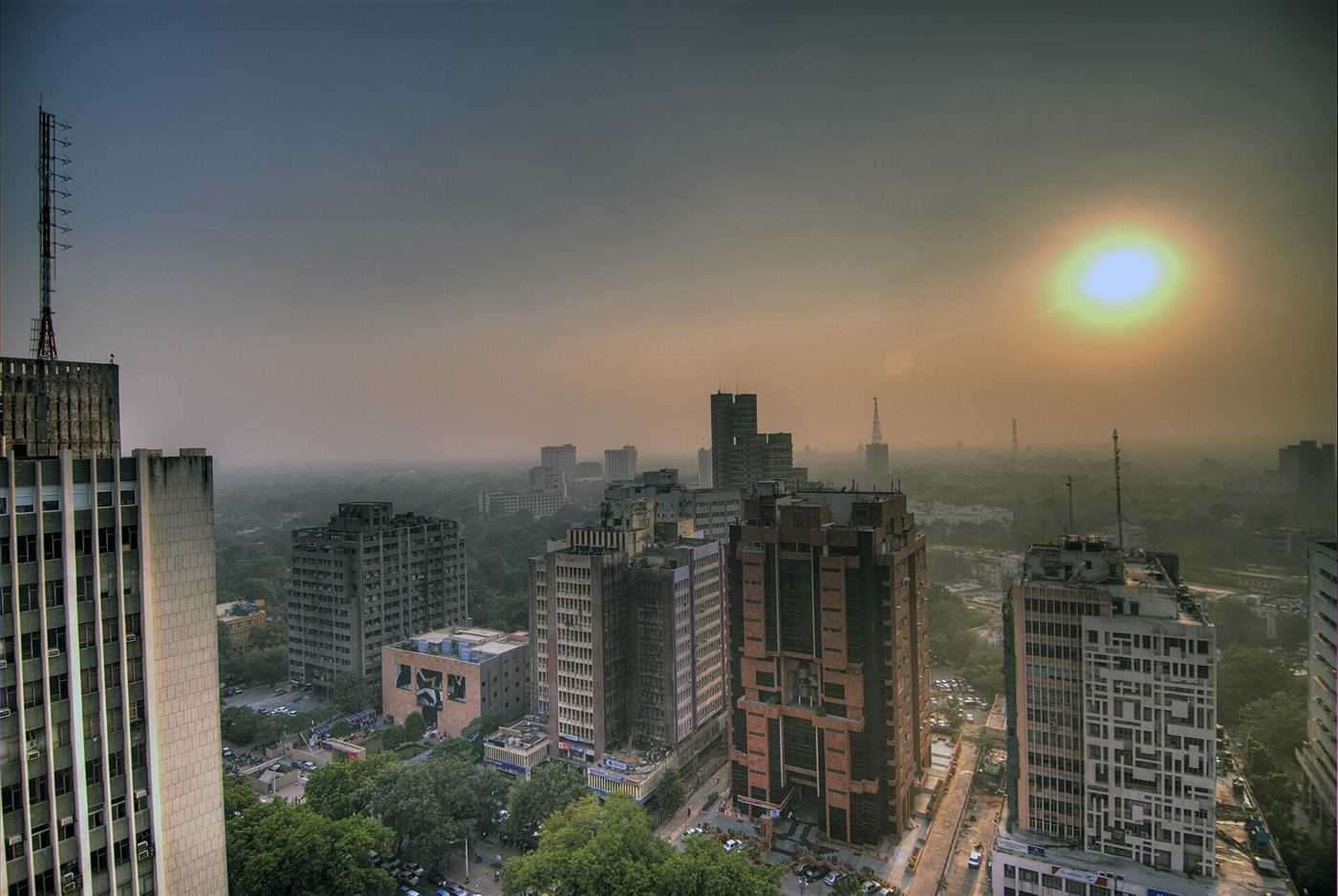
Delhi woke at 2.9 degrees in near-zero fog, with the air quality index at 356
The coldest January morning in three years, an IMD yellow alert, 54 delayed flights and a city-wide AQI in the very poor band: the three problems of a North Indian winter arrived on the same morning.
By Tara Iyengar · Environment Editor, Environment
The short version
- Delhi's minimum temperature fell to 2.9 degrees Celsius on January 15, the lowest January reading since 1.4 degrees on January 16, 2023.
- The overall AQI stood at 356 in the very poor category at the time of reporting, with several monitoring stations above 380.
- At least 54 flights were delayed at Indira Gandhi International Airport, which said operations were continuing under CAT III low-visibility procedures.
Delhi-NCR recorded its coldest January morning in three years on January 15, with the minimum temperature in the city dipping to 2.9 degrees Celsius. The previous comparable low was 1.4 degrees on January 16, 2023. Gurugram fell below 1 degree. Lodhi Road recorded 3.6 degrees, and visibility in several pockets fell to near zero under dense fog that the India Meteorological Department expected to persist through the morning.
- Delhi minimum: 2.9 degrees Celsius, the coldest January morning in three years.
- Gurugram: below 1 degree Celsius. Lodhi Road: 3.6 degrees Celsius.
- Overall Delhi AQI: 356, in the very poor category, with most monitoring stations above 300.
- IGI Airport: at least 54 flights delayed, with operations under CAT III procedures and passenger advisories from the airport and from Air India and IndiGo.
- IMD: yellow alert for cold wave conditions at isolated places, with dense to very dense fog forecast in parts of Delhi until January 16 and in isolated pockets until January 19.
How a cold wave is declared
Under IMD norms, a cold wave is declared when the minimum temperature falls below 10 degrees Celsius and sits 4.5 degrees or more below normal, or when the actual minimum touches 4 degrees Celsius or lower. The agency also warned that cold wave conditions were very likely in isolated pockets of Himachal Pradesh, Uttarakhand, Punjab, Rajasthan, Chhattisgarh and Jharkhand on January 15 and 16, and in western Uttar Pradesh and Delhi on January 15.
The air quality reading is the part with the longest tail. The previous day's 24-hour average had been 353, and the day before that 360. On the morning of January 15 the overall index stood at 356, with areas including Wazirpur and Dwarka reporting readings near 389. The pattern is the familiar one: cold, still air, inversion, and combustion emissions with nowhere to go.
Sources — 6 references
These are the published sources this article was established against. NOT SCRIPTED wrote the text above; the sources below are credited to their own publishers.
- India Today (opens in a new tab)
- The Times of India (opens in a new tab)
- Business Today (opens in a new tab)
- IBTimes (opens in a new tab)
- DNA (opens in a new tab)
- New Kerala (opens in a new tab)
AQI figures vary by hour and station across outlets; the 352 to 356 range is reported as such rather than as a single authoritative value.
About the byline
Tara Iyengar
Edits the environment desk. Tracks air quality data, riverine pollution and the energy transition.
Read about the NOT SCRIPTED newsroom and how our bylines work.
Related coverage
Delhi's wettest July in years produced its worst air quality in seven