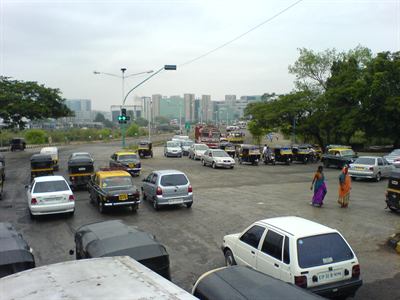
Petrol and diesel go up by ₹3 a litre, and the losses are only partly covered
The first of several May revisions recovered only part of what the oil companies were losing. By the fourth week of the month the cumulative rise had passed ₹7 a litre and the government had begun asking states to watch the pumps.
By Rohit Banerjee · Economics Correspondent, Business

The short version
- Petrol and diesel were raised by ₹3 a litre on May 15, described at the time as covering only part of the losses being incurred by the oil marketing companies.
- The increase cut their estimated daily losses by about a quarter, to roughly ₹750 crore a day, according to Indian Express reporting on May 18.
- The Centre asked states to monitor supplies at retail outlets and check for hoarding and mismanagement.
India raised petrol and diesel prices by ₹3 a litre on May 15, the first of a sequence of revisions that made the second half of May the most expensive fortnight at the pump in recent memory. Prices had been held steady through the first phase of the West Asia disruption, and the increase marked the moment that restraint ended.
The arithmetic behind the revision is straightforward and unflattering. Indian Express reported on May 15 that the ₹3 covered only part of the losses being borne by the public sector oil marketing companies. Three days later it put the effect more precisely: the increase reduced their estimated daily losses by about a quarter, to roughly ₹750 crore a day.
A slow pass-through, made visible
What followed was not a single adjustment but a series. On May 19 petrol and diesel were raised by 90 paise a litre, the second increase in under a week. By May 23 the third revision in nine days had added 87 paise to petrol and 91 paise to diesel. Indian Express reported on May 25 that the cumulative rise since May 15 had passed ₹7 a litre, with the companies' losses down to about ₹600 crore a day.
- May 15: petrol and diesel up ₹3 a litre.
- May 19: up a further 90 paise, the second revision in under a week.
- May 23: petrol up 87 paise and diesel up 91 paise, the third revision in nine days.
- May 25: cumulative rise of more than ₹7 a litre since May 15; company losses around ₹600 crore a day.
Political pressure arrived from both ends. Opposition parties framed the rises as a tax on households already absorbing higher food and transport costs. On the other side, the Punjab government faced demands to cut diesel prices for farmers, a proposal that would have cost it ₹1,650 crore, according to Indian Express reporting on May 27. The Centre also asked states to monitor supplies at retail outlets and check for hoarding and mismanagement.
For consumers the sequence matters more than any single revision. A ₹3 rise announced on one afternoon reads as a decision. Four increases inside eleven days read as the absence of one, passed on in weekly instalments.
Sources — 8 references
These are the published sources this article was established against. NOT SCRIPTED wrote the text above; the sources below are credited to their own publishers.
- Indian Express — Explained (opens in a new tab)
- Indian Express — Business (opens in a new tab)
- Deccan Herald — India (opens in a new tab)
- Indian Express — Business (opens in a new tab)
- Indian Express — Business (opens in a new tab)
- Indian Express — Business (opens in a new tab)
- Indian Express — Business (opens in a new tab)
- Indian Express — Business (opens in a new tab)
About the byline
Rohit Banerjee
Macroeconomics, public finance and the quarterly numbers. Reads the budget documents for pleasure.
Read about the NOT SCRIPTED newsroom and how our bylines work.
Related coverage
India's full-year GDP growth for FY26 revised up to 7.7%, with the March quarter at 7.8%
Schneider Electric is buying US software group PTC in its biggest deal ever

Former finance secretary says India's headline growth rate is 'greatly distorted'. Here is what the dispute rests on