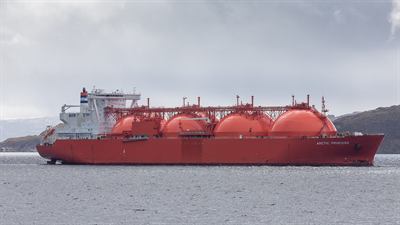
A dry bulk vessel was struck near the Strait of Hormuz and the crew abandoned ship
Reuters, Seatrade Maritime and Al Arabiya reported on the same incident in different registers. NOT SCRIPTED has written an independent summary; the original reports are worth reading in full.
By Dmitri Volkov · Geopolitics Analyst, Geopolitics
The short version
- Reuters reported a ship struck in the Strait of Hormuz as it tracked the status of US-Iran talks.
- Al Arabiya reported a dry bulk vessel hit by a projectile with the crew abandoning ship.
- No outlet identified the attacker, and the accounts differ in detail.
Three outlets reported on the same stretch of water within a day, and each had a different angle. Reuters reported a ship struck in the Strait of Hormuz while covering the uncertain status of US-Iran talks. Al Arabiya reported that a dry bulk vessel was hit by a projectile near the strait and that her crew abandoned ship. Seatrade Maritime covered the same vessel as a cargo ship struck in the waterway.
The accounts agree that a commercial vessel was hit and that the crew left it. They do not agree on the vessel's identity, its flag, the extent of damage, or the precise location. Al Arabiya attributed its account to sources.
What each report adds
- Reuters framed the strike inside a political story about the durability of negotiations.
- Al Arabiya supplied the operational detail — a dry bulk vessel, a projectile, an abandoned crew.
- Seatrade Maritime placed the incident in the shipping-market record used by charterers and insurers.
Abandoning ship is not a routine response. Crew who leave a vessel move out of a steel hull with its own firefighting, power and survival equipment, and into open water where the outcome depends on rescue tugs being available, on weather and on the state of the waterway.
The cargo type matters for how the incident reads. Dry bulk vessels move coal, ore, grain and fertiliser. They do not attract the same volume of reporting as a crude or LNG carrier, and the coverage on this incident is correspondingly thin.
For shipowners and charterers, the practical consequences are commercial rather than naval: war-risk assessments, notice to the flag state, the tow, and the eventual repair. The reporting cited here has not yet reached that stage for this vessel.
- Confirmation of the vessel's name, flag and port of refuge.
- Any crew casualty report, which none of the cited coverage has published.
- A change in war-risk terms for dry bulk voyages through the strait.
Sources — 3 references
These are the published sources this article was established against. NOT SCRIPTED wrote the text above; the sources below are credited to their own publishers.
About the byline
Dmitri Volkov
Great-power competition, defence procurement and India's neighbourhood.
Read about the NOT SCRIPTED newsroom and how our bylines work.
Related coverage