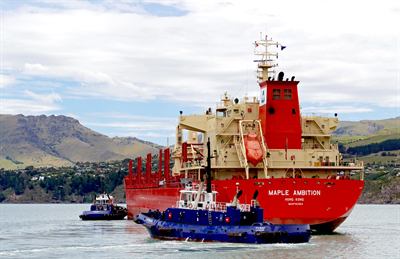
Crude fell about 16% in a day when a two-week US-Iran pause put the Strait of Hormuz back on the board
Brent had been heading toward $120 before the announcement. It closed the session near $94, still roughly 30 per cent above where it traded before the war.
By Leila Haddad · Geopolitics Correspondent, Geopolitics

The short version
- The United States and Iran agreed a two-week ceasefire in which US strikes on Iran would be suspended and Tehran would allow vessels carrying oil and gas through the Strait of Hormuz.
- Sources differ on Brent's closing level on April 8: The National reported $96.52, the Guardian $94.36 in late London trading, and The New York Times $94.75.
- Brent was still around 30 per cent above its pre-war level, when it traded below $73 a barrel.
The most consequential thing that happened to oil prices on April 8 was not a demand figure or an inventory draw. It was an announcement. With about ninety minutes to run before a deadline he had set for Iran, the US president said he was holding off on threatened attacks, subject to Tehran agreeing to a two-week ceasefire and reopening the Strait of Hormuz. Iran's national security council accepted; the foreign minister, Abbas Araghchi, said passage would be allowed for two weeks under the management of the Iranian military.
Brent fell as much as 17.2 per cent intraday and gave back part of the move. Wall Street recorded its biggest single-day rally in a year. Reuters reported that investors had placed a combined $950 million bet on oil prices falling only hours before the announcement was made, which is the sort of detail that gets quoted afterwards and is hard to verify in advance.
The truce was fragile within hours
The two-week arrangement was being tested almost immediately. Israel launched its heaviest wave of bombardment of Lebanon so far, and Iran said those attacks breached the ceasefire while Israel said its offensive on Iranian-backed forces was not covered by it. Reports of an attack on the east-west pipeline in Saudi Arabia, which lets exports bypass the strait, also pushed prices back up off the lows.
The scale of the move should be read against the preceding weeks rather than against the pre-war price. Brent had been marching toward an intraday high of almost $120 a barrel. It ended April 8 near $94 — a fall of roughly a fifth from the peak in a session, and still about 30 per cent above the sub-$73 level at which it traded before the war began.
The market's own read, offered at the time by Kathleen Brooks, a research director at the trading platform XTB quoted by The Guardian, was conditional: only a complete walk-out from the ceasefire and a resumption of bombing would push Brent back above $110 and drag stocks and bonds lower with it. Everything in between was treated as noise around a deadline rather than a resolution.
Sources — 4 references
These are the published sources this article was established against. NOT SCRIPTED wrote the text above; the sources below are credited to their own publishers.
- The Guardian (opens in a new tab)By Kathleen Brooks
- CNBC (opens in a new tab)
- The National (opens in a new tab)By Sarmad Khan
- The New York Times (opens in a new tab)By Joe Rennison
About the byline
Leila Haddad
Energy security, shipping chokepoints and the Gulf.
Read about the NOT SCRIPTED newsroom and how our bylines work.
Related coverage

Iran says the Strait of Hormuz will not reopen until its conditions are met

A Qatar-linked LNG tanker was hit in the Strait of Hormuz, and the waterway's risk premium did not soften
The Strait of Hormuz has been cleared of mines, the United States says