Light, and the switch that opened a field: Deisseroth, Hegemann and Nagel win the 2026 Nobel Prize in Physiology or Medicine
The 2026 prize honours the discovery of light-gated ion channels — the molecular switches that made optogenetics possible. NOT SCRIPTED reads the Nobel Committee's own account of how three independent lines of work converged on the same molecule.
By Nadia Rahman · Health & Science Reporter, Science
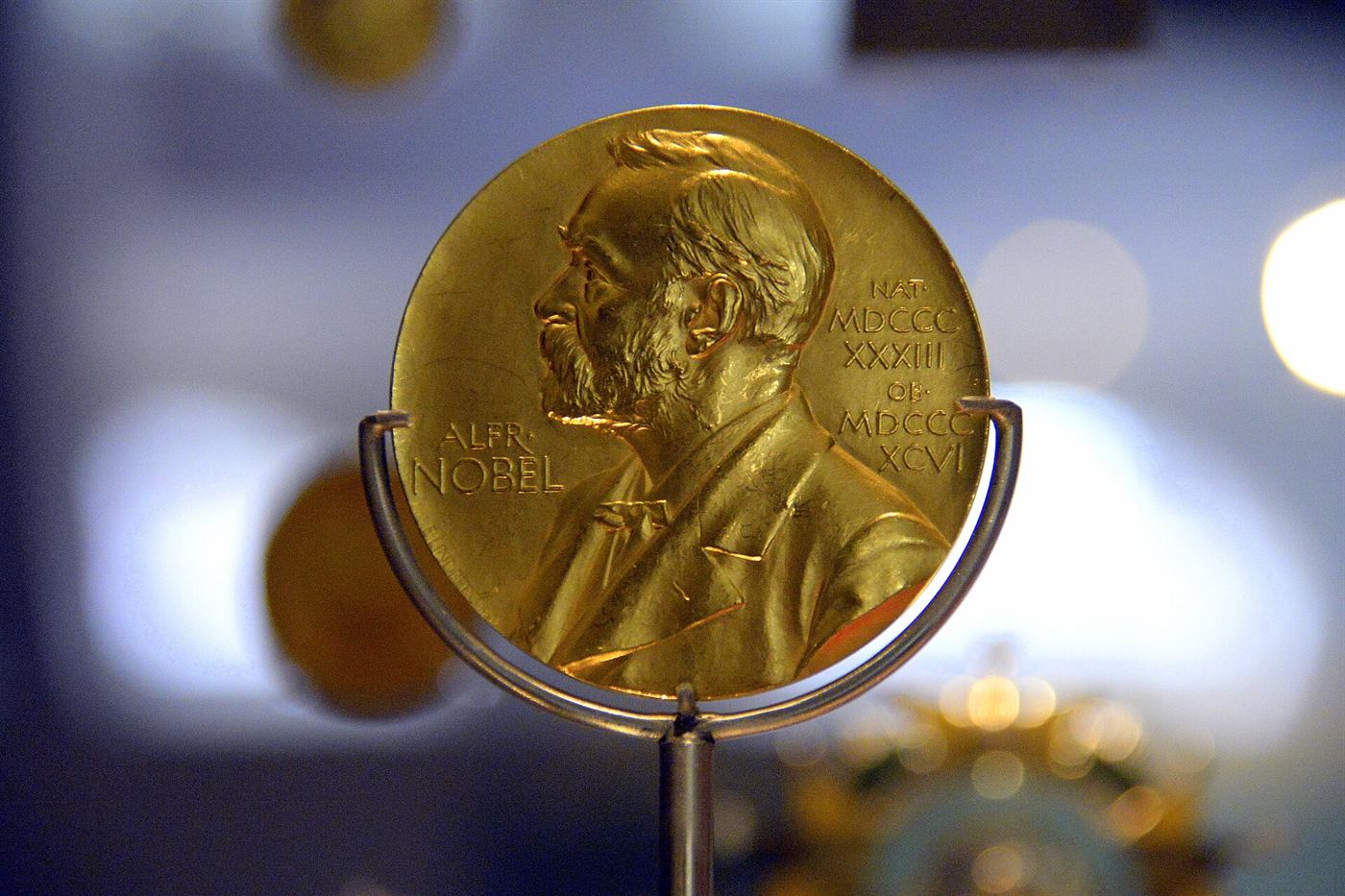
The short version
- The 2026 Nobel Prize in Physiology or Medicine has been awarded to Karl Deisseroth, Peter Hegemann and Georg Nagel for discoveries concerning light-gated ion channels.
- The molecules are microbial rhodopsins, adapted from single-celled green algae, that let researchers switch a cell on or off with a flash of light.
- Those switches became optogenetics, the field that turned light into a tool for studying the brain cell by cell.
On Monday, 5 October 2026, the Nobel Assembly at the Karolinska Institutet awarded the Nobel Prize in Physiology or Medicine to Karl Deisseroth, Peter Hegemann and Georg Nagel. The formal citation reads, in full: "for discoveries concerning light-gated ion channels." It is a short line for a body of work that gave biology a new way to see, and to steer, a living cell.
The popular-information paper published alongside the announcement explains that the story begins not in a laboratory but in single-celled green algae — organisms that, like any plant, need to know where the light is. The algae solved that problem with a family of proteins, and, over two decades, three independent research groups turned those proteins into the instruments that made optogenetics possible.
What a light-gated ion channel actually is
An ion channel is a protein that forms a pore in the membrane of a cell, allowing charged particles — sodium, potassium, calcium, chloride — to cross it. Most channels are opened or closed by voltage or by the binding of a chemical signal. A light-gated channel is different: its state flips in response to a photon.
The sensor that makes this possible is a coloured molecule derived from retinal. When light strikes it, the retinal changes shape, which changes the shape of the protein around it, and the pore opens or shuts. It is a molecular switch that responds not to a drug or a voltage but to light itself — and it does so in a matter of milliseconds.
- Most ion channels respond to voltage or to chemical signals; light-gated ones respond to photons.
- They switch in milliseconds, roughly the timescale of a spike of neural activity.
- The molecules originate in single-celled green algae, not in animals — a case of biology borrowing from a very distant cousin.
Three routes to the same switch
The three laureates did not work as a team but moved in parallel, on different organisms and different questions, and the Committee's account is careful to keep the three lines distinct. Hegemann's group identified, in the single-celled alga Chlamydomonas, a rhodopsin that behaved not as a signal but as a light-activated ion channel. That was the pivotal observation: it converted what had been described as a sensory pigment into a switch a researcher could operate.
Deisseroth's laboratory did something with that class of molecules that no one had done before: expressed microbial opsins in mammalian neurons, so that a beam of light could be used to excite or to silence a specified class of nerve cell. This is the birth of optogenetics as a research discipline.
Nagel and his colleagues characterised the light-gated chloride channel — a molecular on-off switch that, because chloride movement is inhibitory, could quiet a cell as well as excite it. Together these lines made it possible to move a cell up or down its activity with light, at the speed and the spatial precision of the biology itself.
Why the discovery reorganised a field
For most of the twentieth century, neuroscientists probed the nervous system with electrodes, drugs and heat — blunt instruments that were slow, that acted on whatever cells happened to be nearby, and that could not cleanly separate excitation from inhibition. Light-gated channels replaced that vagueness with a key that fits one lock.
The technique spread quickly through circuit mapping, behavioural work and the study of reward, fear and reward-seeking circuits. It also became a general tool beyond the brain: light was used to interrogate the heart, the gut and immune cells, because the underlying principle is about membranes and ions, not about neurons specifically.
What the prize is really marking
A recurring theme in this year's citation is the distance between a fundamental discovery and the tool it becomes. A protein that lets an alga find the light ends up as a reagent sold by the microlitre, used in laboratories on five continents. The Nobel Committee's account makes clear that the laureates each unlocked a distinct step of that chain: the channel, the neural application, and the inhibitory switch.
It is also worth noting what the citation does not say. It does not name a disease, a therapy, or a company. Light-gated ion channels have not, yet, become a clinical treatment. What they became was a way of looking — the thing most prizes are, in the end, marking.
Sources — 4 references
These are the published sources this article was established against. NOT SCRIPTED wrote the text above; the sources below are credited to their own publishers.
- Nobel Prize Committee, Karolinska Institutet — press release, 2026 prize in Physiology or Medicine (opens in a new tab)
- Nobel Prize Committee, Karolinska Institutet — popular information, 2026 prize in Physiology or Medicine (opens in a new tab)
- NobelPrize.org — 2026 Nobel Prize in Physiology or Medicine summary (opens in a new tab)
- Reuters (opens in a new tab)
Original reporting grounded in primary sources: the Nobel Prize Committee's 2026 press release and popular-information paper for the prize in Physiology or Medicine (both 5 October 2026), cross-checked against Reuters' announcement coverage of the same date.
About the byline
Nadia Rahman
Public health, clinical research and the long tail of epidemiology.
Read about the NOT SCRIPTED newsroom and how our bylines work.
Related coverage
IN-SPACe's chairman says ISRO will stop making launch vehicles and hand the technology over
Four fossil leaves from Assam push the kevda family's record back 24 million years
NASA names the Artemis 3 crew — and the mission will not set foot on the Moon